Eissey Theater Exhibition Information

It is time again for another of our great Lighthouse Camera Club exhibitions at the Eissey Theater at Palm Beach State College.

The exhibit space is limited to about 30-Pieces and it is on a first come, first space basis.

You must notify  jefforns@comcast.net of your intention to exhibit, image title and sale price by August 25

Here are the requirements for this exhibit:

  • There is no specific theme or subject
  • Images must be framed
  • Framed sizes must be between 12″x16″ and 24″x 36″
  • Must be securely wired and ready for hanging
  • Must have a legible label attached to the back with your: Name, Address, Phone Number, Title of the piece and Sale Price.
  • You must complete and submit this form : APPLICATION FOR EISSEY ART EXHIBIT

Dates for Delivery and Pick-up at the theater are as follows:

Location: Eissey Theater 11051 Campus Dr, Palm Beach Gardens, FL 33410
Phone (561) 207-5900

Delivery of Framed Pieces : October 7, 2015  Before Noon

Removal Date: November 10, 2015 Before Noon

Magnum and the Dying Art of Darkroom Printing

sarahjcoleman's avatarthe literate lens

A few years ago, I had the pleasure of spending some time with Pablo Inirio, master darkroom printer at  Magnum Photos in New York. I was thinking about that interview recently as I heard the news of Kodak’s bankruptcy and pondered the precarious status of “old media” like books, film and silver gelatin prints.

As Magnum’s printer, Inirio gets to work with some of photography’s most iconic images. In his small darkroom, the prints lying casually around include Dennis Stock’s famous portrait of James Dean in Times Square (right) and a cigar-chewing Che Guevara shot by Rene Burri. Intricate squiggles and numbers are scrawled all over the prints, showing Inirio’s complex formulas for printing them. A few seconds of dodging here, some burning-in there. Will six seconds be enough to bring out some definition in the building behind Dean? Perhaps, depending on the temperature of the chemicals.

Of course, this…

View original post 806 more words

Track A – History of Street Photography, Part 1

Great site about the history of street photography.

Bill Jones, Jr.'s avatarThe Artists' Sanctum

As indicated in the Introduction, this is Track A (History of Street Photography). Track B (Art of Composition and the Composition of Art) will start in the near future. You can find a link to the posts already written to date on The Art of Street Photography page in the header above.

Part 1 – The Evolution of Street

When María and I sat out to begin documenting the history of street photography, after some discussion, we realized that given the great variation in the art form, it was best to begin a discussion of what street photography is by looking at its pioneers and the work they created. In this chapter, we’ll touch on some of the acclaimed masters and tell you a bit about them and their work. We won’t do much analysis of their work here; that’s probably best served by looking at one photographer at…

View original post 1,457 more words

Do you have used equipment to sell?????

Hello LCC Members,

Do you have used cameras or accessories you would like to sell????

Please include the following info in your e-mail to lighthousecameraclub@gmail.com

Condition of the Item, Full Description, Price and how you would like to be contacted by the prospective purchaser.

Then it will be posted on the Used Equipment For Sale Page here on our website.

LCC Holiday Party

Hello LCC members,

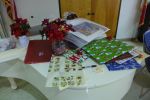
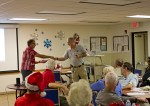
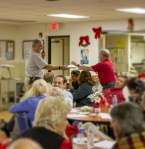
The holiday meeting was a packed house with  about 70 members in attendance. We had great food and a sideshow presentation by Jeff Ornstein of photos from his Yellow Stone trip.

A big thank you to Charles Gilbert, Walter Schoellnast and the LCC board members that helped put the party together.


Along The Trail

Photography By Steve daPonte's avatarPhotography by Steve daPonte

Sometimes there are interesting places that are in the middle of your neighborhood or maybe right in your own backyard.

This little park I found between the Library and the Post Office is for the most part left to fend for itself. A carpet of pine needles blankets the ground and pinecones are left to fall where they may. That is what I like most about this place as most everything else around here is manicured to perfection. But, is not the way of nature in and of itself perfection enough?

 steve_daponte_alongthepath_img2780

The fern-lined path on a cool fall day in Florida provides relief from the constant heat and makes for a pleasant walk. I felt thankful that I did not have to continually wipe the sweat from my face as I looked through the viewfinder.

steve_daponte_alongthepath_img2797

As I walked observing  the nature around me, I slowed down long enough to notice the…

View original post 43 more words

ISO what is it?

In two previous posts Aperture and Shutter Speed we the subjects.

The subject for this post is ISO which is the third factor in controling and setting the desired exposure.

What do the ISO i.e. 50,100,200,400,800 etc. numbers mean?

Back in the days of film you had to choose a film speed ASA Now ISO.  The number indicated the films rated sensitivity to light. Now in Modern Digital Cameras the roll of film has been replaced by a digital CMOS or CCD Sensor. No more need to change a roll of film to change ISO you simply turn a dial 🙂

In todays digital camera the ISO number indicates the digital sensors sensitivity to light. The  only drawback is that when you increase the ISO you decrease the image quality. This is due to digital noise created by the electronics involved. You could compare this to a sound system, you turn the volume up and at a certain point you will get distortion.

In digital photos the noise will slowly introduce a grainy look, if you zoom into a photo shot at high ISO like ISO 1000 something else happens to. The photo will start to have purple splotchy color cast to it. This is digital noise.

That is the trade off when using ISO to increase your ability to capture a handheld shot in low light conditions. So you should first try adjusting your aperture before going for the ISO increase or simply use a tripod.

We will discuss more about the relationship of ISO, Shutter Speed and Aperture in the next post about the Exposure Tri-angle.

Here image examples one at ISO 50, ISO 6400, ISO 25600 shot with a Canon 5D MII & 100mm F2.8 Macro Lens

ISO 50

ISO 50


ISO 6400

ISO 6400


ISO25600

ISO25600 Grainy and purple/blue cast in the image